

The traditional path to launching a startup required technical expertise, substantial capital, and often a complete departure from stable employment. In 2026, the landscape has fundamentally shifted. Professionals across industries are building successful businesses by leveraging no-code platforms and systematic frameworks that eliminate the need for programming knowledge. This transformation enables anyone with domain expertise to create a startup without coding skills, maintaining job security while testing and validating business concepts.
The Evolution of No-Code Entrepreneurship
The no-code movement has matured from simple website builders to comprehensive platforms capable of powering sophisticated business operations. This shift democratizes entrepreneurship by removing technical barriers that previously kept talented professionals from pursuing their business ideas.
Understanding the No-Code Landscape in 2026
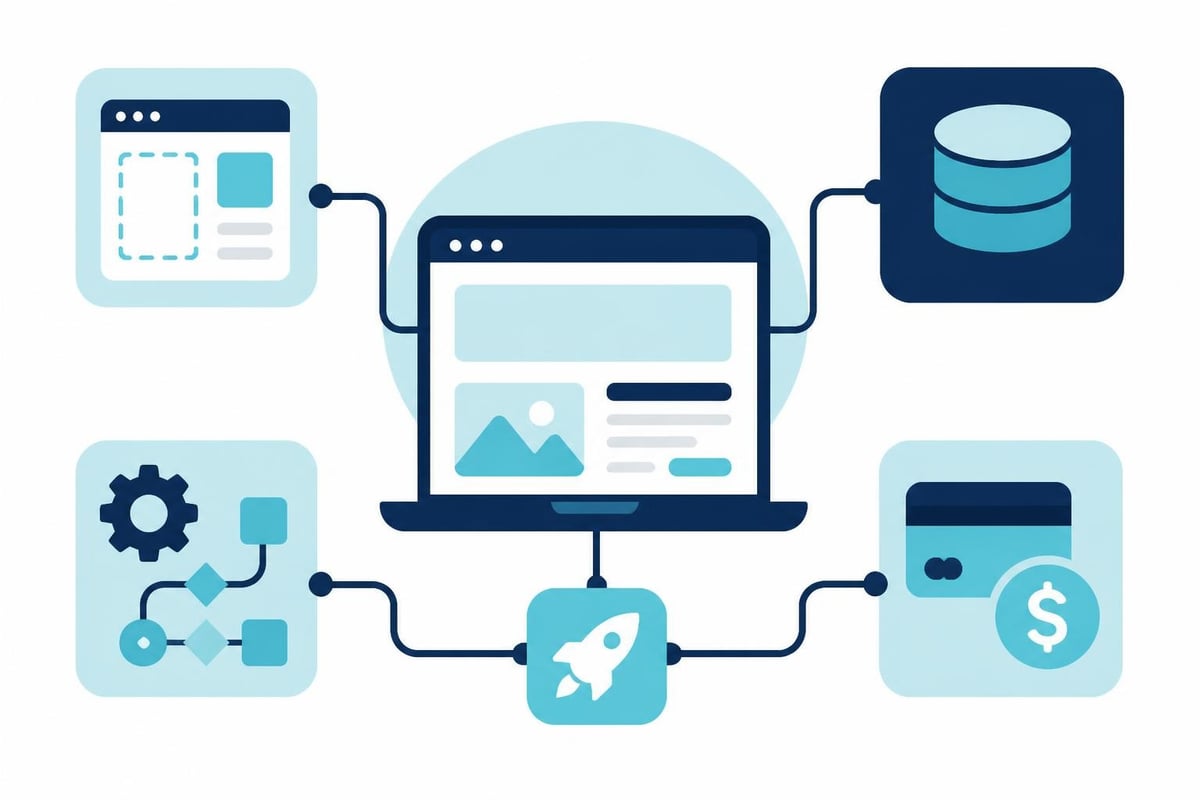
Modern no-code platforms provide enterprise-grade functionality without requiring a single line of code. Over 37 no-code and low-code platforms now exist across different categories, each designed to handle specific business functions.
Key categories include:
- Frontend builders for customer-facing websites and applications
- Database and backend systems for managing business logic and data
- Automation platforms that connect different tools and workflows
- Payment and commerce solutions for monetization
- Customer relationship management for scaling operations
The accessibility of these tools fundamentally changes who can launch a startup. Domain experts in fields like consulting, design, marketing, and operations no longer need technical co-founders to bring their ideas to market.
Validating Your Startup Idea Without Building
The most critical mistake aspiring founders make is building before validating. A startup without coding advantages means you can test concepts rapidly, but validation must precede development.
The Pre-Build Validation Framework
Before selecting tools or creating products, you need confirmation that customers will pay for your solution. This validation process protects your time and resources.
Follow this sequence:
- Identify a specific problem within your area of expertise
- Interview 15-20 potential customers to understand pain severity
- Create a simple landing page describing your solution
- Collect email addresses or pre-orders to gauge interest
- Conduct discovery calls with interested prospects
- Secure commitments before building anything substantial
This approach leverages your professional knowledge while minimizing risk. You're not quitting your job or investing months into development. Instead, you're systematically testing whether your expertise translates into a viable business opportunity.
The validation process for tech startups applies equally to service-based and product businesses. The fundamental question remains: will customers pay enough to make this worthwhile?
Building Your Minimum Viable Product
Once validation confirms demand, you can build a minimum viable product (MVP) that delivers core value. The goal is creating something functional that solves the validated problem, not achieving perfection.
Selecting the Right No-Code Stack
Your technology choices should align with your business model and customer needs. A consulting business requires different tools than a SaaS product or marketplace.
| Business Type | Primary Tools | Secondary Tools |
|---|---|---|
| Service/Consulting | Webflow, Airtable, Calendly | Zapier, Stripe, ConvertKit |
| Digital Products | Gumroad, Notion, Memberstack | Loom, Teachable, Circle |
| SaaS Applications | Bubble, Xano, WeWeb | Make, Supabase, Stripe |
| Marketplaces | Sharetribe, Softr, Glide | Airtable, Memberstack, PayPal |
For most professionals starting a business while employed, simpler stacks prove more effective. A comprehensive guide on building a startup without coding emphasizes starting with familiar tools and adding complexity only when necessary.
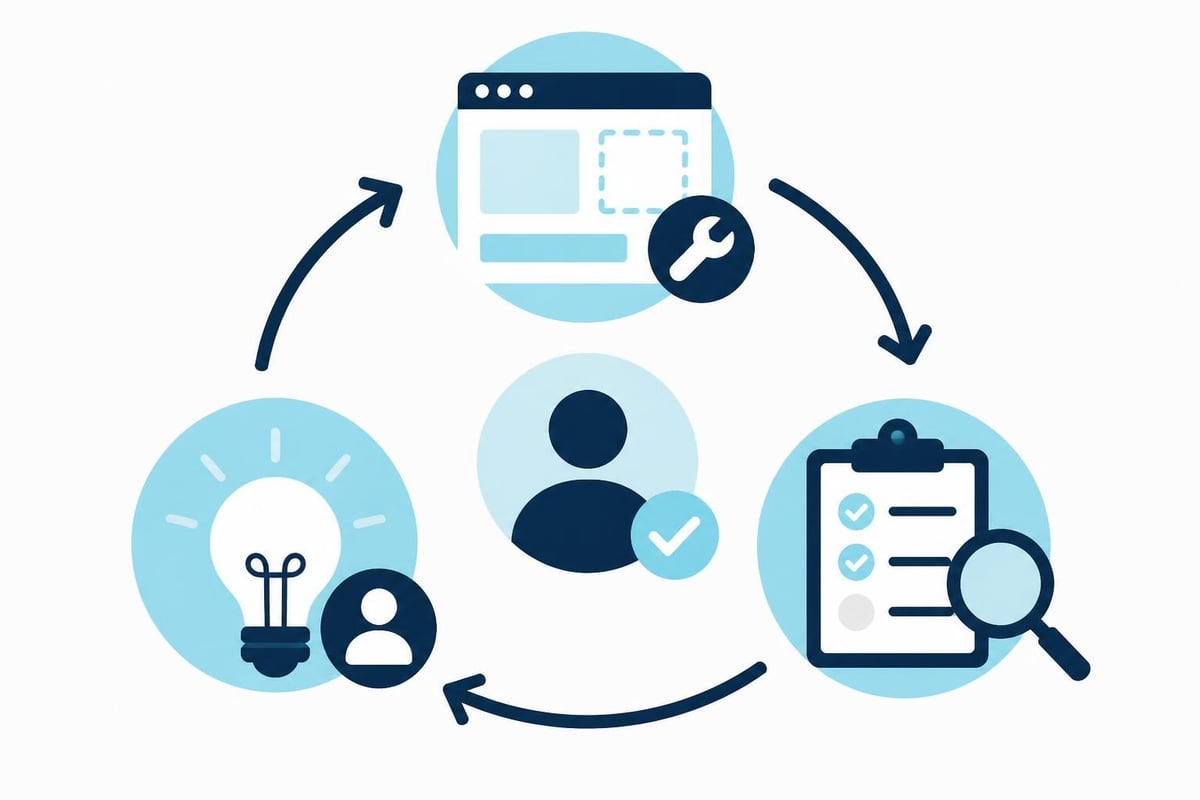
The Build-Measure-Learn Cycle
Launching a startup without coding enables rapid iteration. You can modify features, test pricing, and adjust positioning without technical dependencies.
Implement this cycle:
- Build the simplest version that delivers promised value
- Measure customer behavior and feedback systematically
- Learn what works and what needs adjustment
- Iterate quickly based on data rather than assumptions
This framework works because no-code tools offer flexibility. You're not locked into architectural decisions that require extensive refactoring. Changes happen in hours or days, not weeks or months.
Leveraging AI to Accelerate Development
Artificial intelligence has emerged as a powerful accelerator for non-technical founders. In 2026, AI-powered startup development enables capabilities that previously required engineering teams.
Practical AI Integration for Non-Coders
You don't need to understand machine learning to leverage AI in your startup. Modern platforms provide API access to powerful models through simple integrations.
Common AI applications:
- Content generation for marketing materials and customer communications
- Customer service automation through intelligent chatbots
- Data analysis and insights from customer behavior patterns
- Personalization engines that adapt experiences to individual users
- Image and video creation for visual content needs
The emergence of vibe coding and AI-driven development means you can describe what you want in plain language and AI assists in creating it. This bridges the gap between vision and execution for founders without technical backgrounds.
Structuring Your Business for Scale
Building a startup without coding skills is one challenge. Creating a business that scales profitably without consuming all your time represents another. Structure determines whether you create a job for yourself or a genuine business asset.
Implementing Repeatable Systems
Scalability depends on systems that work independently of your constant involvement. Documentation, automation, and clear processes enable growth without proportional time investment.
Consider the systematic approach taught in programs like the Productized OS MasterClass, which guides professionals through building businesses that generate $10K-50K monthly while maintaining their current employment. This structured framework ensures you're not just launching, but building something sustainable and sellable.
Essential systems to document:
- Customer acquisition process from first contact to closed sale
- Service delivery or product fulfillment workflows
- Quality assurance standards and checkpoints
- Customer support protocols and response templates
- Financial management including invoicing and collections
These systems transform your startup from a side project into a legitimate business operation. They also increase enterprise value if you eventually sell.
Pricing Strategy for Profitability
Many professionals undervalue their expertise when launching a startup without coding experience. They assume lower prices compensate for being new or lacking technical sophistication. This thinking undermines profitability.
| Pricing Model | Best For | Implementation Tools |
|---|---|---|
| Project-Based | Consulting, design, specialized services | Stripe, PayPal, HelloSign |
| Retainer | Ongoing services, maintenance, support | Chargebee, Recurly, Stripe Billing |
| Subscription | Software, communities, content access | Memberstack, Podia, Circle |
| Usage-Based | APIs, platforms, consumption services | Stripe Metered Billing, Lago |
Price based on value delivered, not hours worked or the simplicity of your tech stack. Customers pay for outcomes and transformation, not the complexity of your implementation.
Managing Risk While Employed
One significant advantage of building a startup without coding is the reduced financial risk. You're not raising capital or hiring developers. You can test and grow while maintaining income stability.
The Side-Project to Full-Time Transition
The path from employed professional to full-time founder requires careful planning. You need financial milestones and clear transition criteria.
Transition framework:
- Phase 1: Build and validate while fully employed (Months 1-3)
- Phase 2: Land first customers and generate initial revenue (Months 3-6)
- Phase 3: Achieve consistent monthly revenue of $5K-10K (Months 6-12)
- Phase 4: Scale to $15K-25K monthly before considering transition (Months 12-18)
- Phase 5: Reach 6-12 months of expenses in business revenue before leaving job
The Productized OS framework emphasizes this measured approach. You're building a business that could replace your salary, but you're not gambling with your livelihood.
Time Management for Side Founders
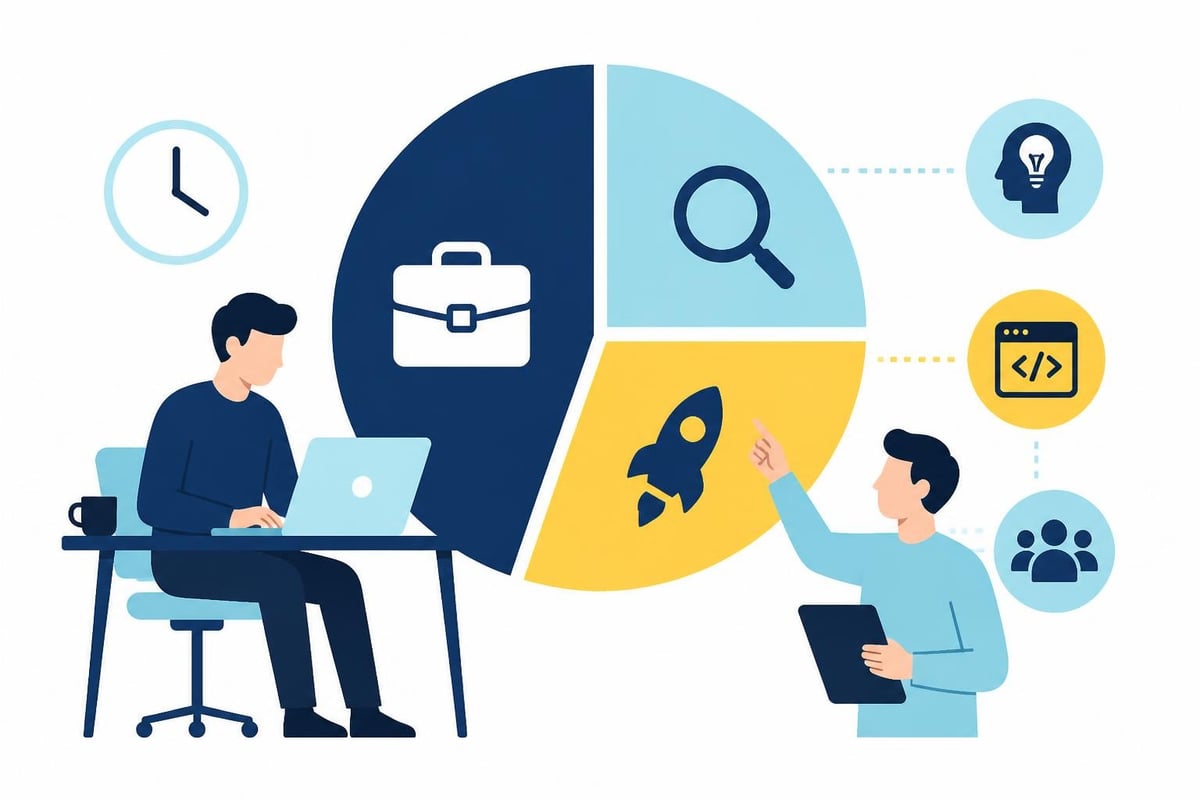
Building a business alongside full-time employment demands disciplined time allocation. You have limited hours for maximum impact.
Optimize your available time:
- Batch similar tasks to minimize context switching
- Automate repetitive processes using no-code automation tools
- Set clear boundaries between job responsibilities and business development
- Focus on revenue-generating activities during peak energy hours
- Delegate or eliminate tasks that don't drive growth
Platforms that allow building without coding save enormous time compared to traditional development. What might take months to code can be assembled in days or weeks using modern tools.
Marketing Your Startup as a Solo Founder
Technical skills aren't required to market effectively. Your professional expertise and systematic approach matter more than advertising budgets or growth hacks.
Content-Driven Customer Acquisition
The most sustainable customer acquisition strategy for a startup without coding expertise centers on demonstrating knowledge. You already possess domain expertise. Share it strategically.
Content channels by effort and impact:
- LinkedIn articles showcasing professional insights and case studies
- Email newsletters building relationships with potential customers
- YouTube videos explaining concepts and demonstrating expertise
- Podcast appearances reaching established audiences in your niche
- Twitter threads distilling complex topics into accessible insights
This approach works because you're attracting customers who already value your expertise. They see you as an authority before the sales conversation begins.
Strategic Partnerships and Referrals
Solo founders benefit enormously from partnerships with complementary businesses. These relationships provide access to established customer bases without advertising costs.
Partnership opportunities:
- Referral agreements with businesses serving similar customers
- Integration partnerships with platforms your customers already use
- Co-marketing initiatives splitting costs while sharing audiences
- White-label arrangements where you deliver services under partner brands
- Affiliate programs incentivizing others to promote your offering
Building these relationships requires the same consultative skills you use in your current profession. You're identifying mutual value and structuring win-win arrangements.
Financial Management and Metrics
Understanding key business metrics ensures you're building something financially viable. A startup without coding costs has different economics than traditional tech companies.
Essential Financial Metrics to Track
You need visibility into both current performance and future trajectory. These metrics guide decision-making and highlight problems before they become critical.
| Metric | Formula | Target Benchmark |
|---|---|---|
| Monthly Recurring Revenue (MRR) | Sum of all monthly subscriptions | +20% month-over-month |
| Customer Acquisition Cost (CAC) | Total marketing spend ÷ new customers | <33% of customer lifetime value |
| Customer Lifetime Value (LTV) | Average revenue per customer × retention period | 3x customer acquisition cost |
| Gross Margin | (Revenue – direct costs) ÷ revenue × 100 | >70% for digital products |
| Burn Rate | Monthly expenses – monthly revenue | Negative (profitable) |
These numbers tell you whether you're building a sustainable business or an expensive hobby. Research on no-code platforms shows that entrepreneurs choose these tools specifically to optimize these metrics through reduced development costs.
Reinvestment Strategy
Profits from your startup without coding can accelerate growth if deployed strategically. The question isn't whether to reinvest, but where to allocate limited resources.
Reinvestment priorities:
- Customer acquisition through proven channels
- Process automation to increase capacity without time investment
- Product enhancement addressing customer feedback
- Team expansion for specific high-leverage activities
- Brand building through professional design and positioning
Early-stage businesses should bias toward customer acquisition and automation. These investments compound over time, creating sustainable growth.
Scaling Beyond Yourself
True business value emerges when operations don't depend entirely on your daily involvement. This transition from operator to owner creates optionality and enterprise value.
Building Your First Team
Hiring doesn't mean full-time employees immediately. Strategic contractor relationships provide leverage without fixed overhead.
First hires for maximum impact:
- Virtual assistant for administrative tasks and scheduling
- Customer success specialist for onboarding and support
- Content creator for marketing asset production
- Sales development representative for outbound prospecting
- Operations manager to systemize delivery processes
No-code platforms enable faster MVP launches, which means you can achieve profitability quicker and afford these strategic hires sooner than traditional startups.
Exit Options and Business Value
Even if you don't intend to sell immediately, building for eventual exit increases options. A startup without coding infrastructure can still command significant multiples if structured properly.
Value drivers for acquirers:
- Recurring revenue with strong retention metrics
- Documented systems enabling smooth ownership transition
- Customer concentration with no single customer exceeding 15% of revenue
- Growth trajectory showing consistent expansion
- Platform independence with ability to migrate if needed
These factors determine whether you've built a lifestyle business or a valuable asset. Both are valid goals, but clarity about your intention shapes daily decisions.
Common Pitfalls to Avoid
Even with accessible tools and frameworks, founders make predictable mistakes that undermine their progress. Awareness prevents these issues.
Overbuilding Before Validation
The ease of building with no-code tools creates a dangerous temptation. You can add features quickly, so you do, without confirming customers actually want them.
Warning signs of overbuilding:
- Adding features before achieving product-market fit
- Spending more time building than talking to customers
- Perfecting aesthetics before validating core value proposition
- Building for edge cases that affect less than 5% of users
- Implementing features because competitors have them
Launch with minimal functionality. Add features based on paying customer requests, not hypothetical scenarios.
Tool Proliferation and Integration Complexity
The no-code ecosystem offers hundreds of specialized platforms. New founders often adopt too many, creating integration nightmares and subscription costs.
Platform selection principles:
- Start with 3-5 core tools maximum
- Ensure native integrations exist between platforms
- Choose tools with strong community support and documentation
- Avoid niche platforms unless absolutely necessary
- Consider total cost of ownership including integration time
Simplicity beats sophistication in early-stage businesses. You can always add complexity later when requirements justify it.
Neglecting Legal and Financial Foundations
A startup without coding requirements still needs proper business structure. Operating without correct legal and financial frameworks creates future problems.
Essential administrative setup:
- Proper business entity formation (LLC or S-Corp typically)
- Separate business banking and accounting
- Contract templates reviewed by legal counsel
- Clear intellectual property ownership documentation
- Appropriate insurance coverage for your business type
These foundations protect personal assets and create clean structures for future investment or sale.
Advanced Strategies for Competitive Advantage
Once basic operations are stable, strategic sophistication separates thriving businesses from surviving ones. These approaches leverage your professional expertise for sustainable competitive advantage.
Building Proprietary Methodologies
Your startup without coding can still create defensible intellectual property through unique frameworks and processes. These methodologies become valuable assets that differentiate your offering.
Document your approach to solving customer problems. Name it. Trademark it if appropriate. Reference it in marketing materials. This proprietary methodology becomes a moat that competitors can't easily replicate, even if they use the same no-code tools.
Community-Led Growth
Professional communities provide leverage beyond individual relationships. Building a community around your expertise creates network effects that compound over time.
Community building platforms:
- Circle for paid membership communities
- Discord for engaged customer conversations
- Slack for professional networking groups
- LinkedIn Groups for industry-specific discussions
- Mighty Networks for comprehensive community experiences
Active communities generate customer referrals, product feedback, content ideas, and partnership opportunities. They transform your business from transactional to relational.
Data-Driven Decision Making
Even without technical expertise, you can implement sophisticated analytics. Modern no-code tools provide business intelligence capabilities that inform strategic decisions.
Track behavioral data to understand which features drive retention, which marketing channels produce best customers, and where users experience friction. This data discipline separates professional operations from amateur efforts.
Building a startup without coding represents an extraordinary opportunity for professionals in 2026. The combination of mature no-code platforms, AI assistance, and systematic frameworks eliminates historical barriers to entrepreneurship. You can validate ideas, build products, acquire customers, and scale operations without writing code or quitting your job. Productized OS provides the comprehensive framework and structured guidance to transform your professional expertise into a scalable, profitable business while maintaining the security of your current employment. Whether you're targeting your first $10K month or building toward a full salary replacement, the systematic approach to no-code entrepreneurship creates a clear path from concept to sustainable business.